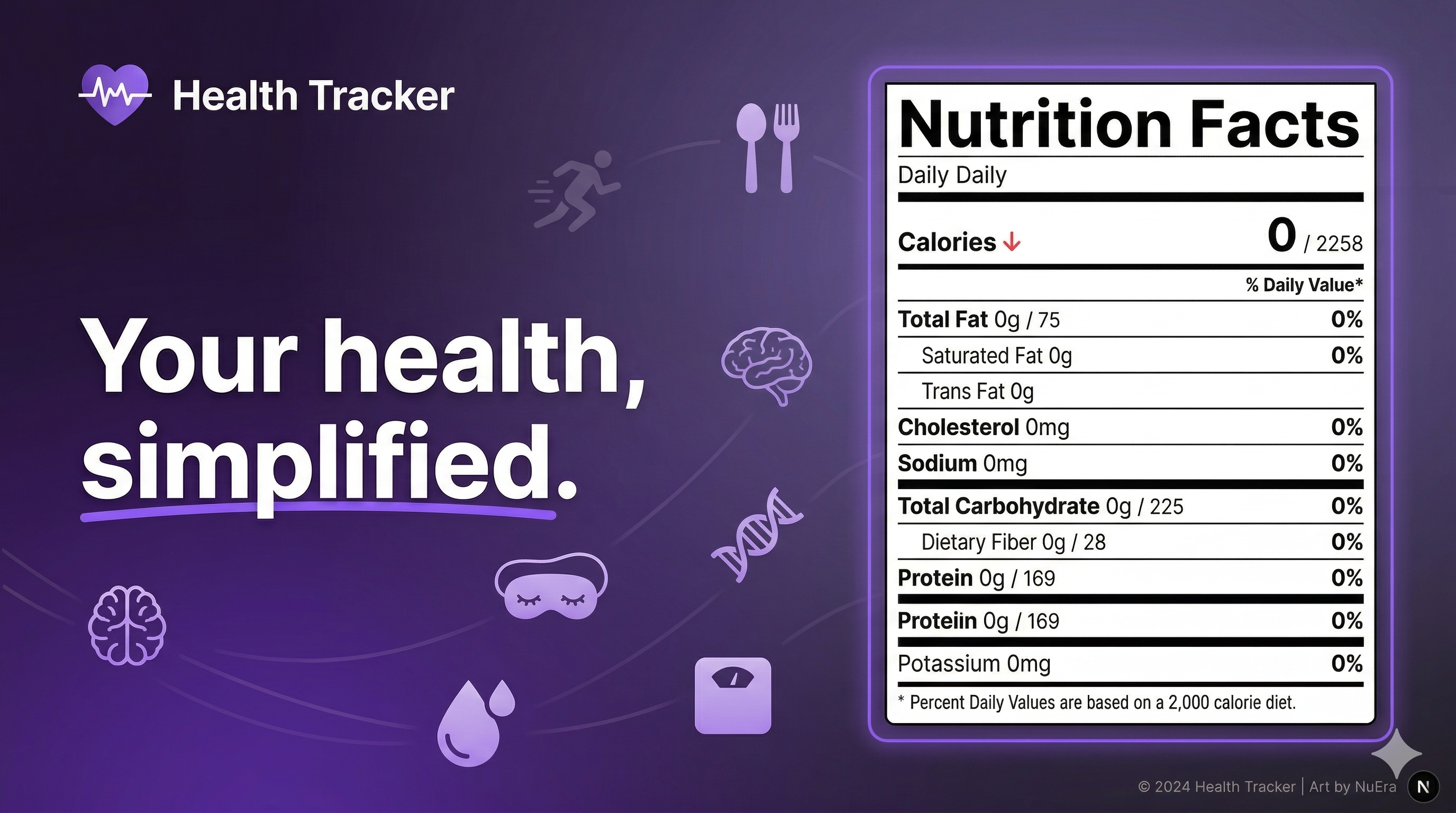

Live at healthtracker.mdcran.com · Source available
A personal health platform for workouts, nutrition, sleep, vitals, habits, therapeutics, appointments, and body metrics, with AI food analysis and exportable reports.
Contribution & implementation
Built the Next.js frontend and Spring Boot backend around a unified dashboard. The application supports Google Drive backups, AI-assisted health insights, PDF reports, CSV exports with date ranges, and containerized deployment.
Engineering approach
- Separate the Next.js frontend from the Spring Boot API and persist relational data in PostgreSQL with Flyway migrations.
- Use Docker to package the services and document the local setup for reviewers.
- Support both structured export (CSV) and readable health summaries (PDF) across customizable date ranges.
- Keep health data flows understandable across tracking, AI insight, backup, and export features.
Java · Spring Boot · Next.js · PostgreSQL · Flyway · Docker · Google Drive API · AI
Architecture at a glance
Simplified from the public implementation notes. Select a component.
The frontend presents a unified tracking dashboard and reports.
Guided case study & hands-on walkthrough
Six review steps grounded in the published implementation. Tradeoffs are architectural interpretation; next evaluations are suggestions.
Problem
Health tracking, reports, and backups need a consistent interface and a structured data model across multiple tracking categories.
Try a date-range CSV export
A working browser-only illustration of the documented export workflow, using three fictional sample records. This is not connected to the Health Tracker application or anyone’s health data.
3 sample records in the inclusive date range.
Date,Category,Entry,Amount
"2026-01-08","Workout","Sample walk","25 minutes"
"2026-01-10","Sleep","Sample sleep log","8 hours"
"2026-01-12","Workout","Sample mobility session","15 minutes"
Download sample CSV
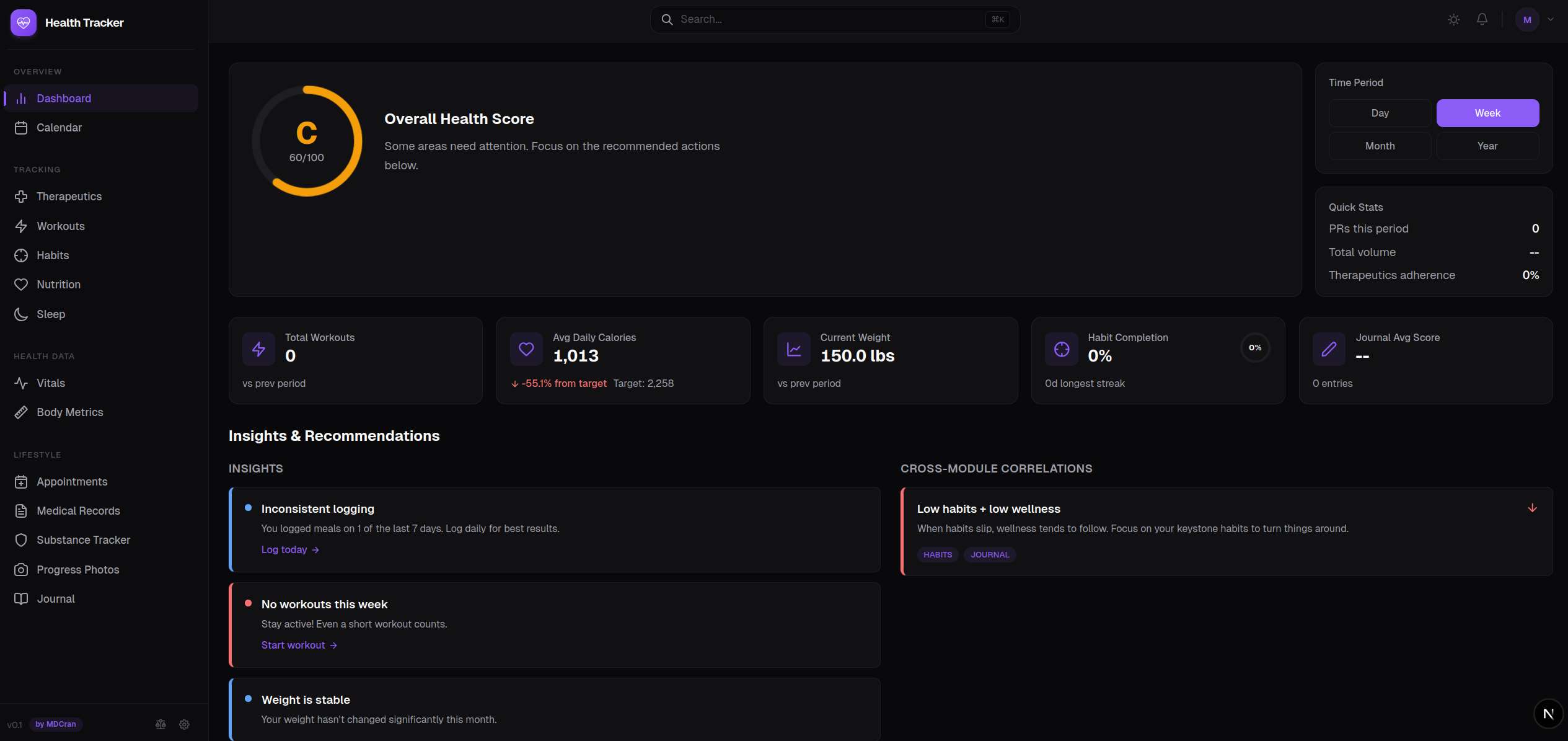
A full-stack personal health management platform built with Spring Boot and Next.js that consolidates fitness, nutrition, medical, and wellness tracking into a single unified dashboard.
The platform integrates with Google Drive for backups, generates AI-powered health insights across all modules, and supports PDF report exports and CSV data exports with customizable date ranges. The backend runs on Spring Boot with PostgreSQL and Flyway migrations, while the frontend is a Next.js application — both containerized with Docker and deployed on Render.
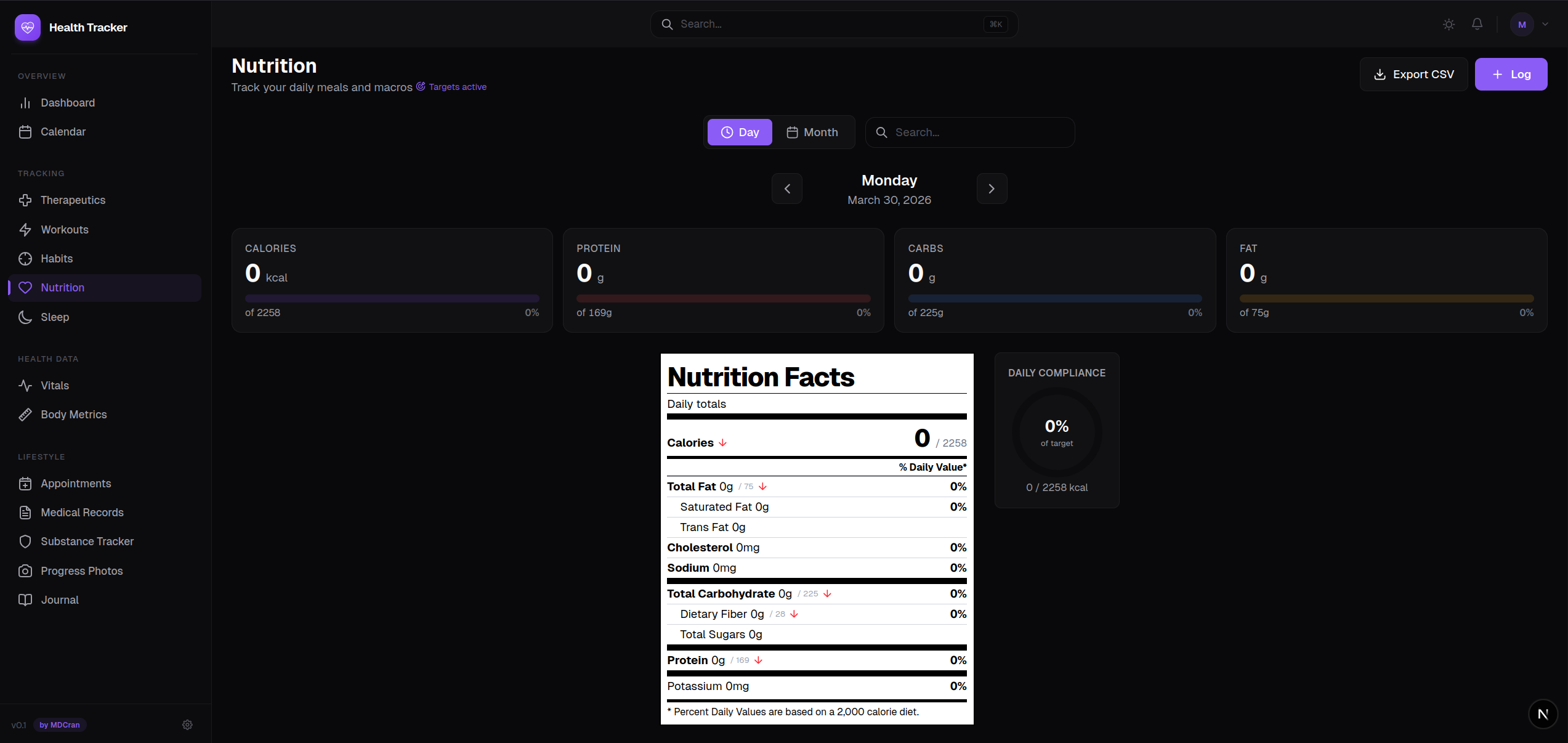
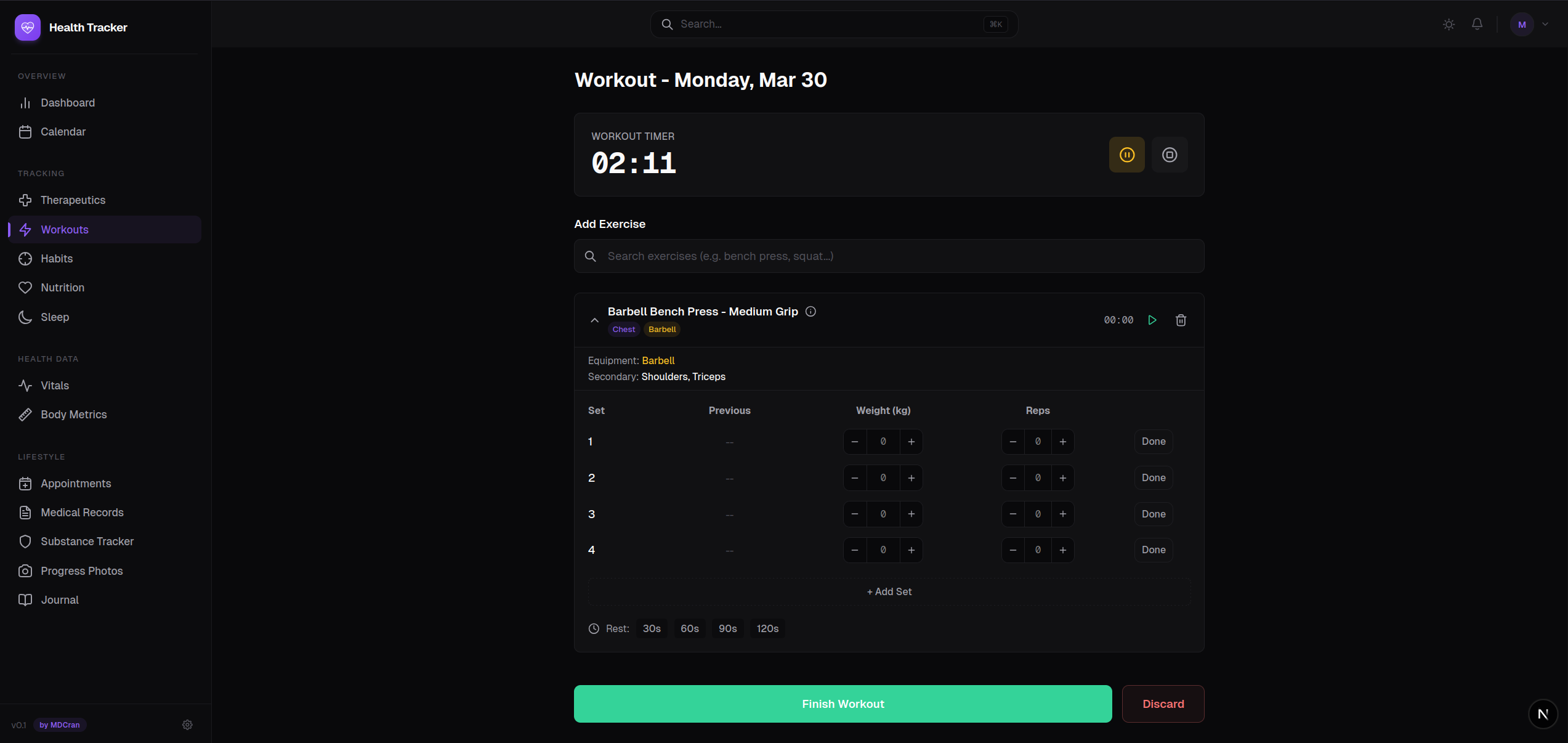
The application tracks workouts with personal records and exercise history, logs daily nutrition with AI-powered food image analysis, monitors vitals like blood pressure and heart rate, and manages body metrics, sleep patterns, and progress photos over time. It also includes a therapeutics module for medications, supplements, and peptides, a habit tracker with streaks and milestones, a journal with mood scoring, substance use logging, appointment scheduling, and medical document storage.
Dashboard
Nutrition Tracking
AI Nutrition Demo
Gallery
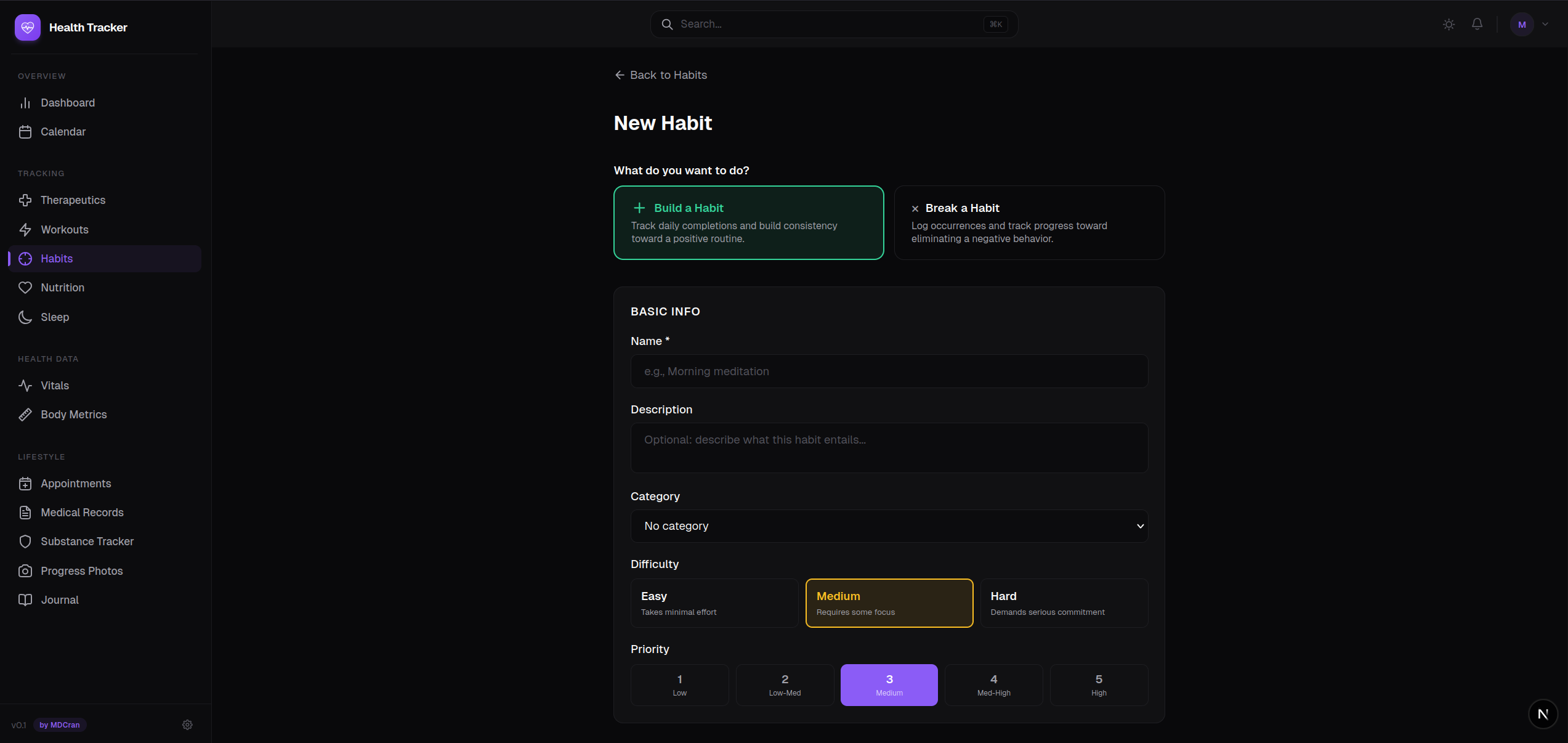
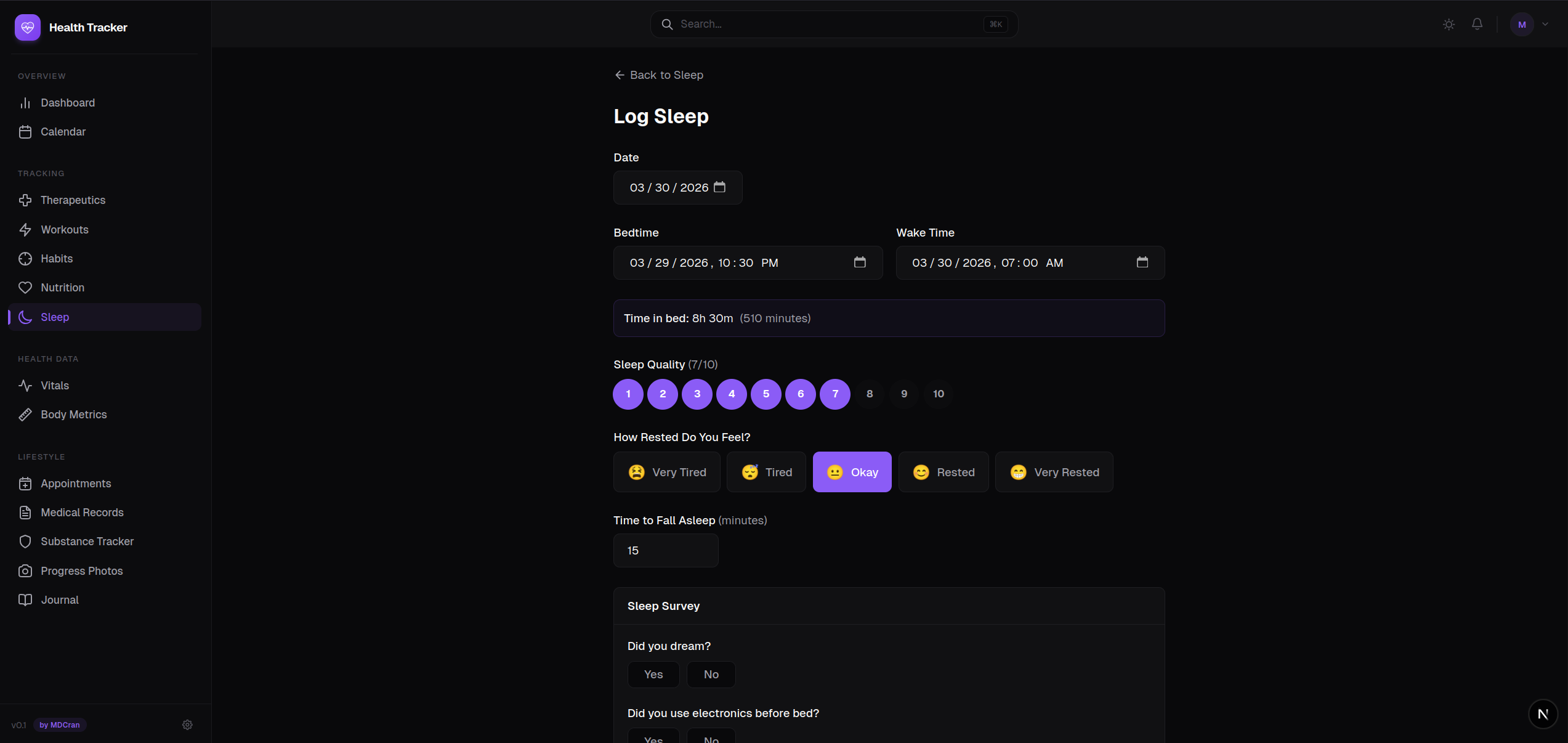
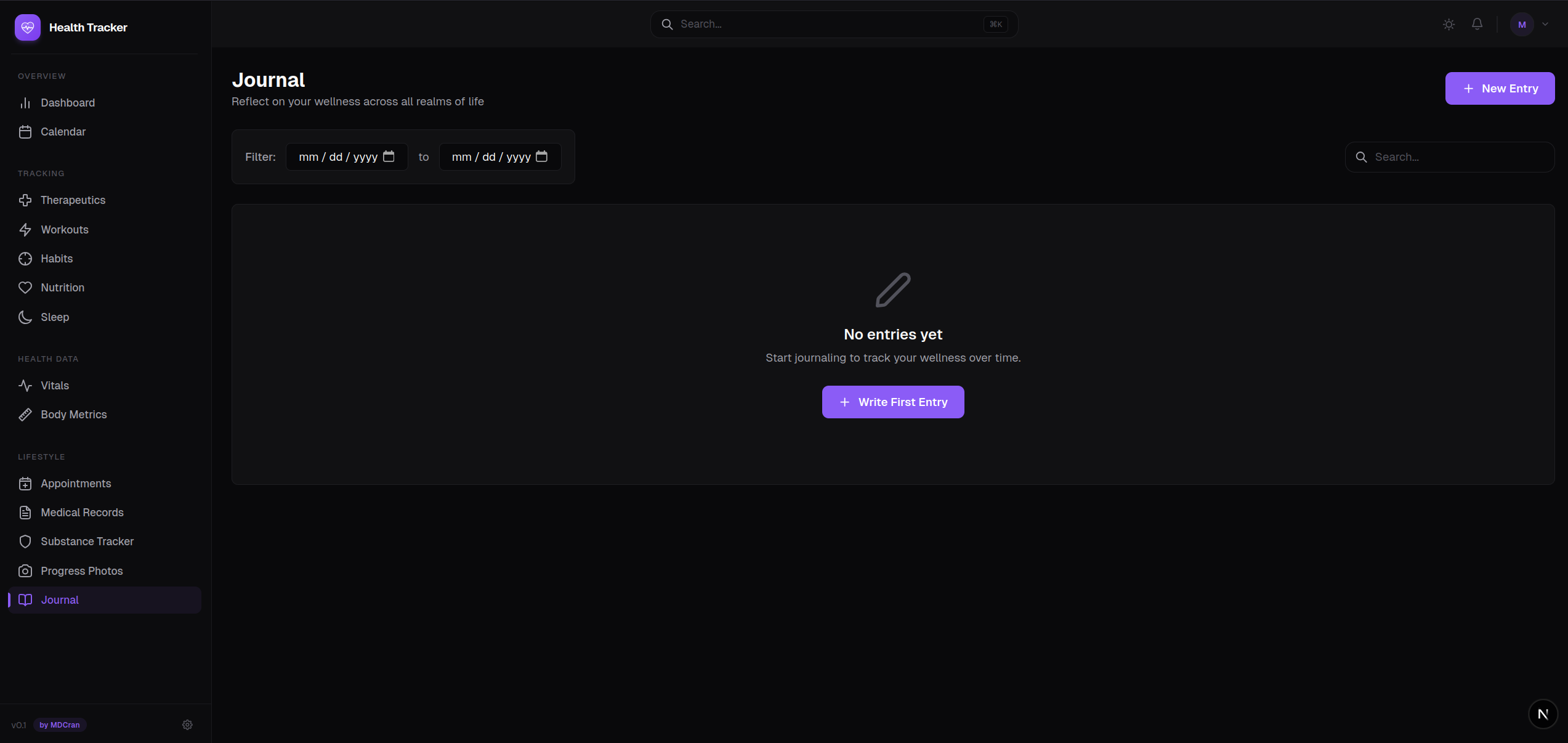
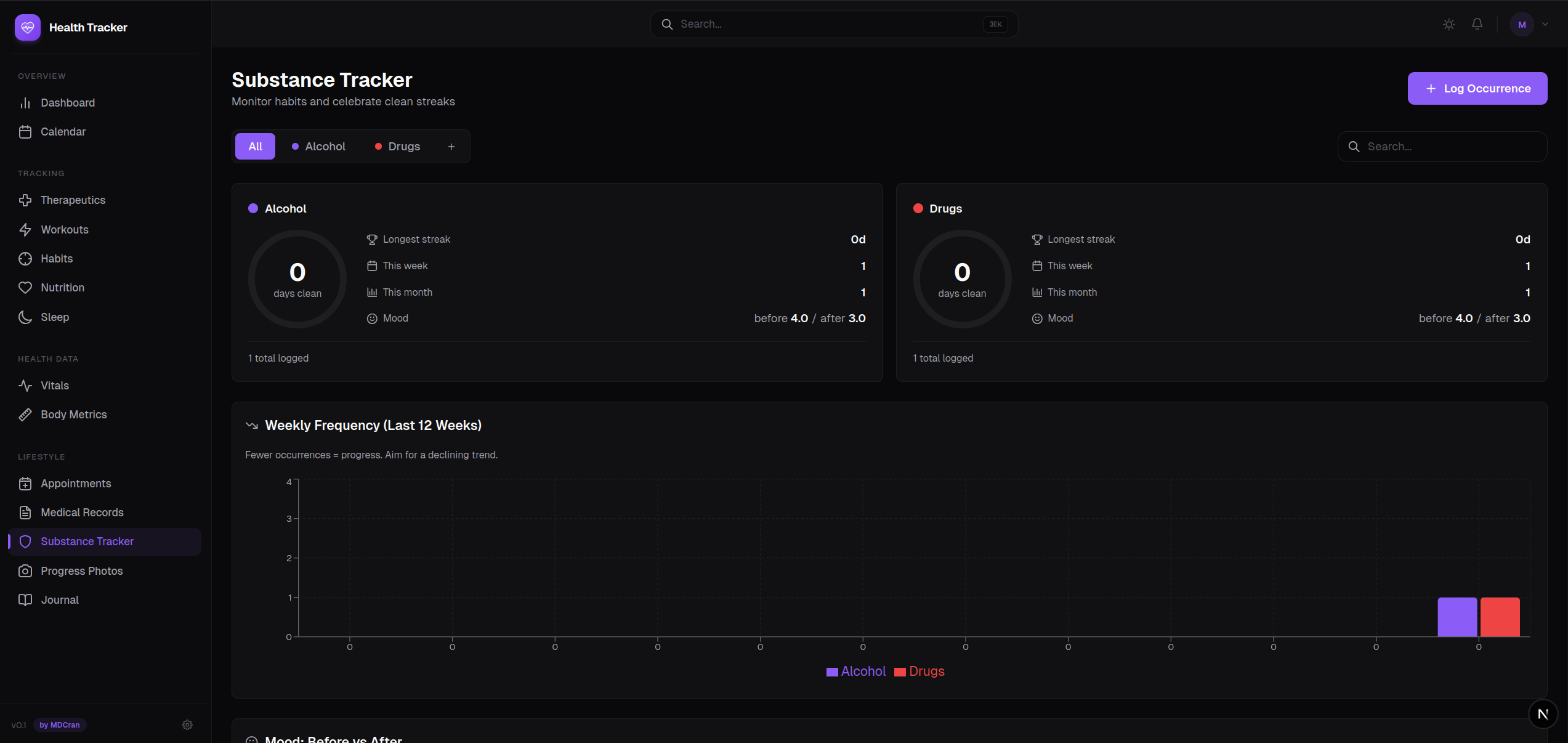
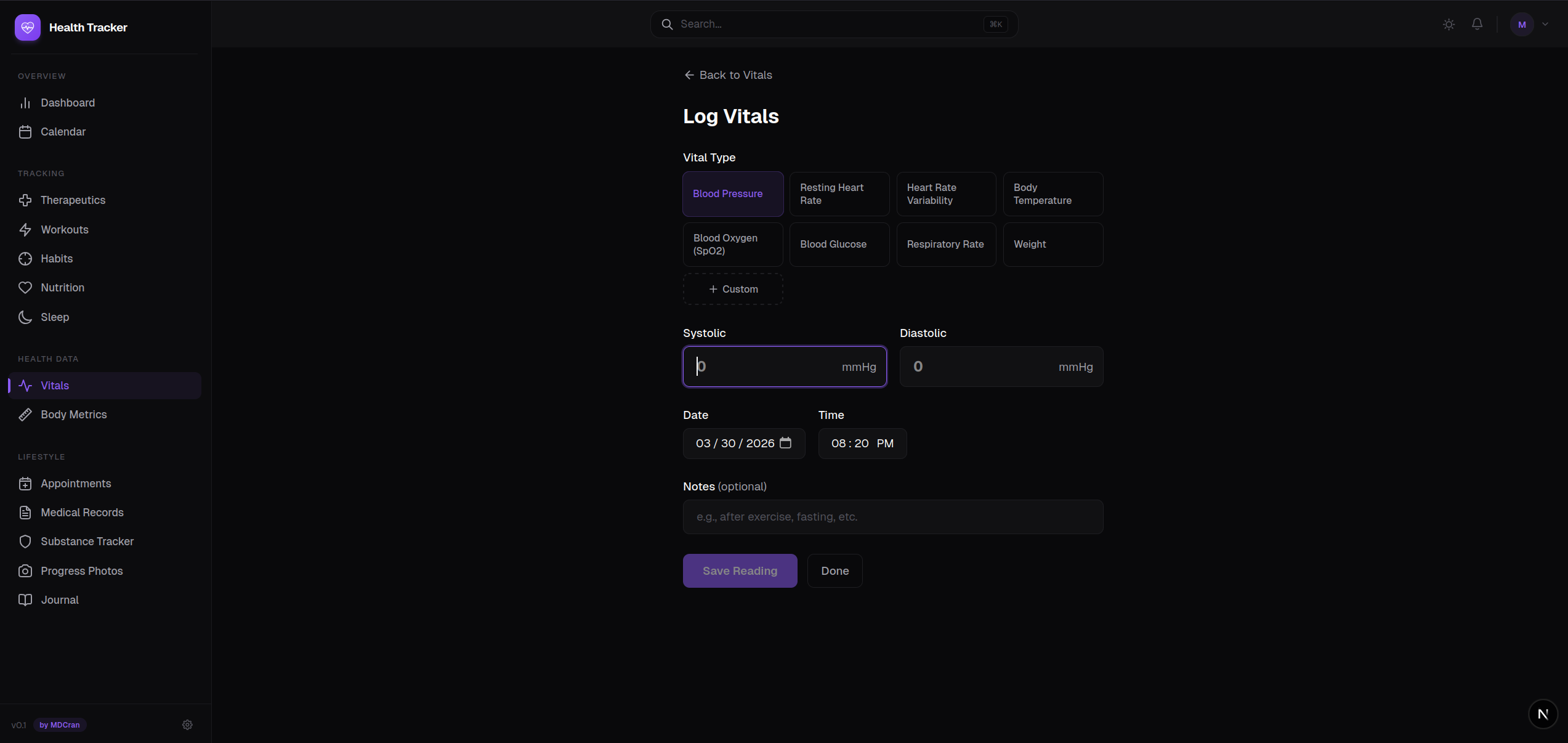
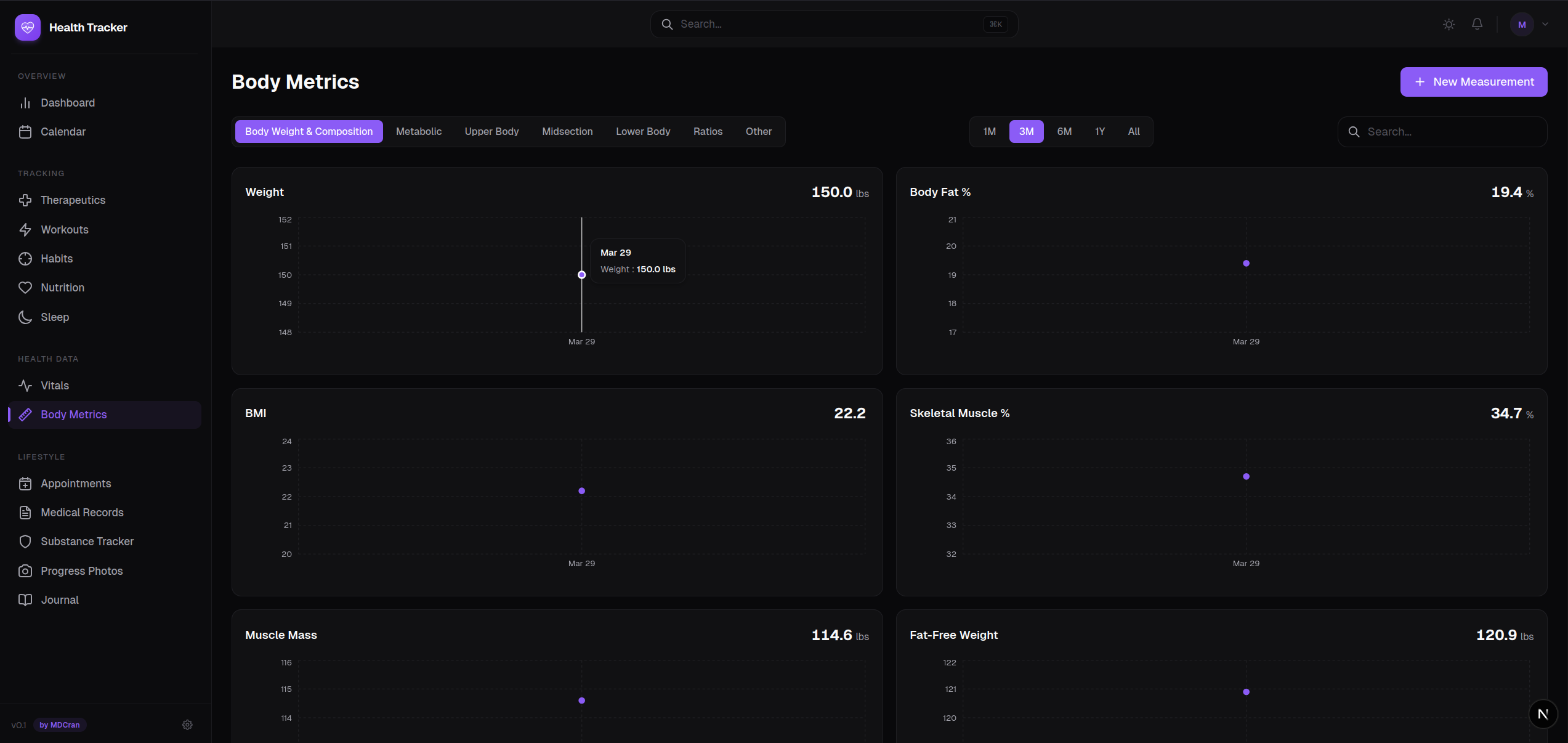
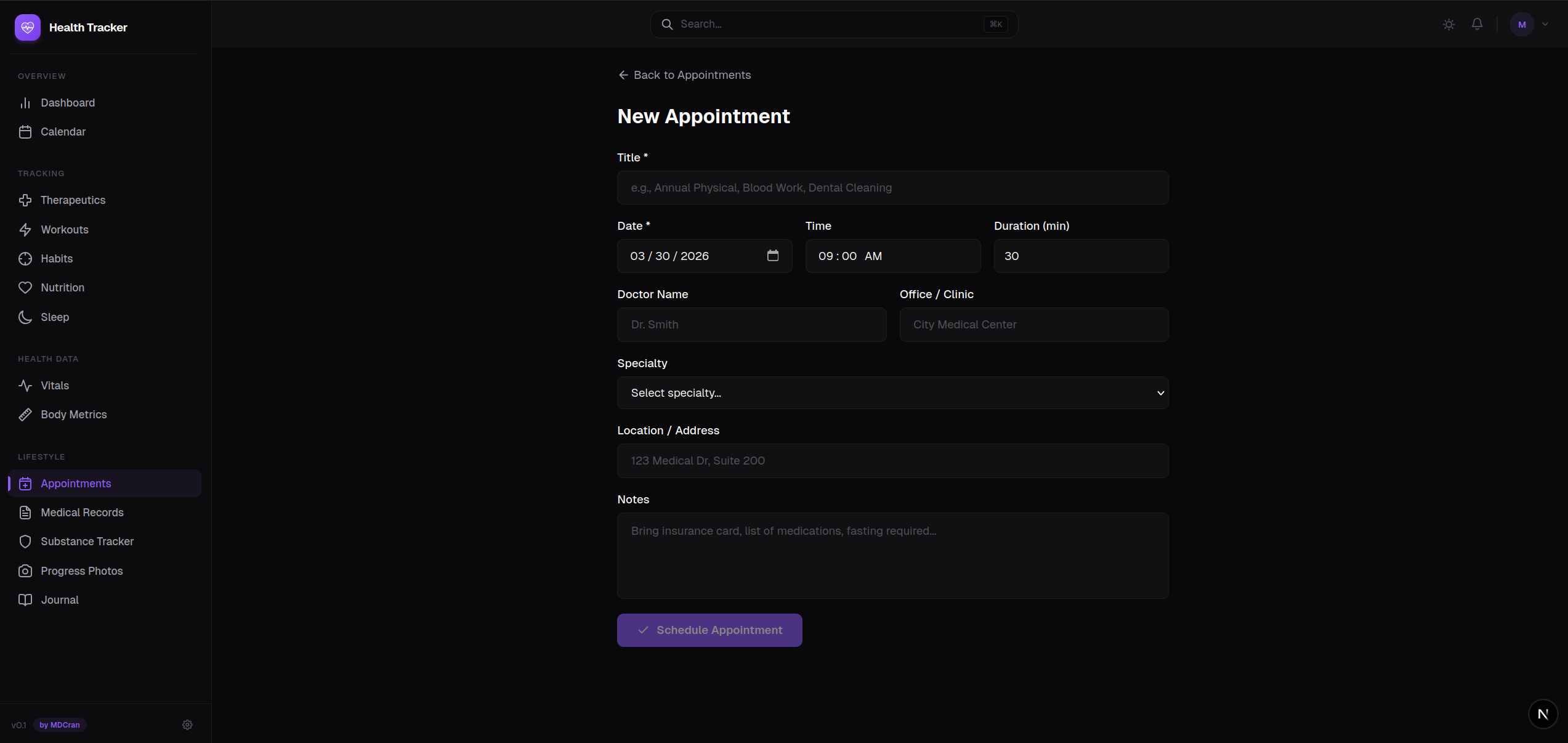
Appreciate this project
AI guide
Share
Other Projects
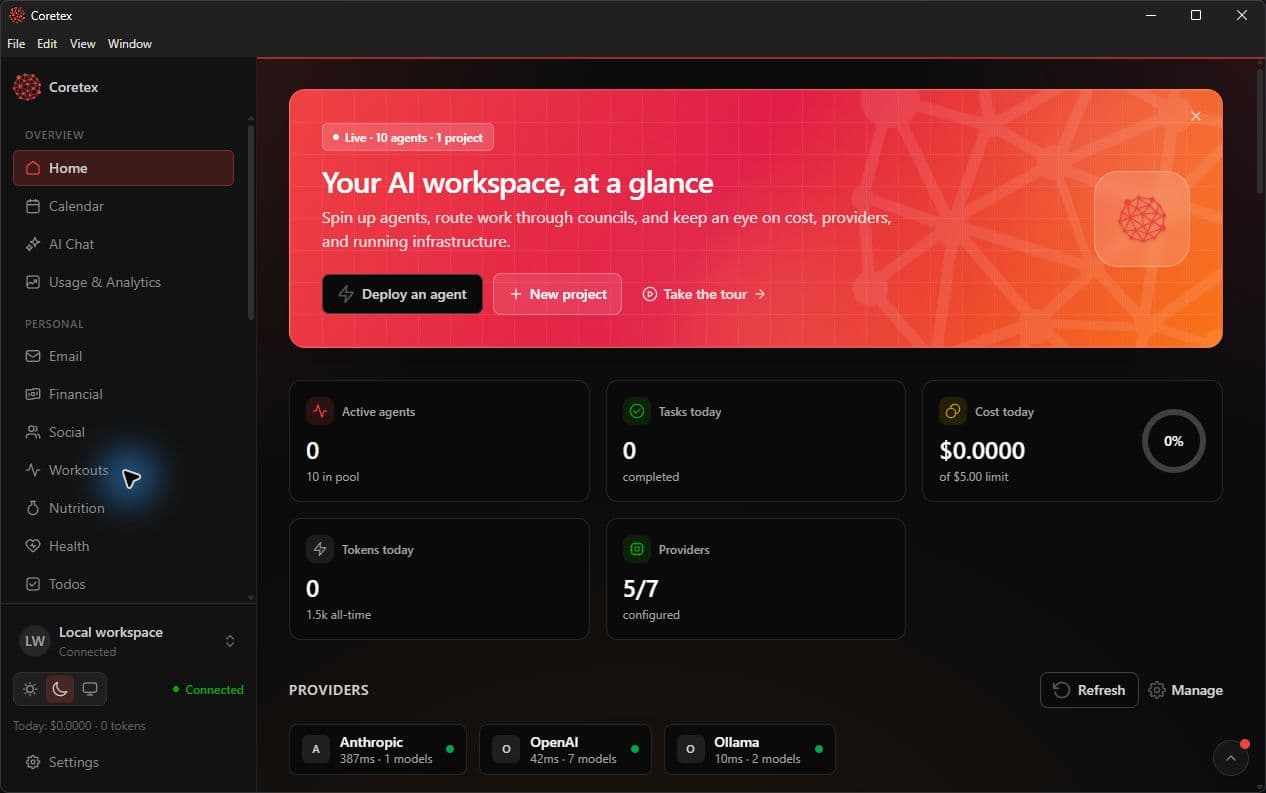
A local-first workspace for AI agents, projects, productivity, personal analytics, and developer operations. Coretex brings the tools used to run work and life into one focused Windows desktop app. It combines agent orchestration, project planning, communication, local infrastructure, and personal tracking behind a responsive React interface.

The public CORE Business Technology platform for websites, growth, AI, automation, and workplace technology. CoreTV.co brings services, pricing, estimates, booking, contact, and client access into one responsive product experience. This entry outlines the public platform while linking the reusable Core AI safety contracts repository behind the private product systems.
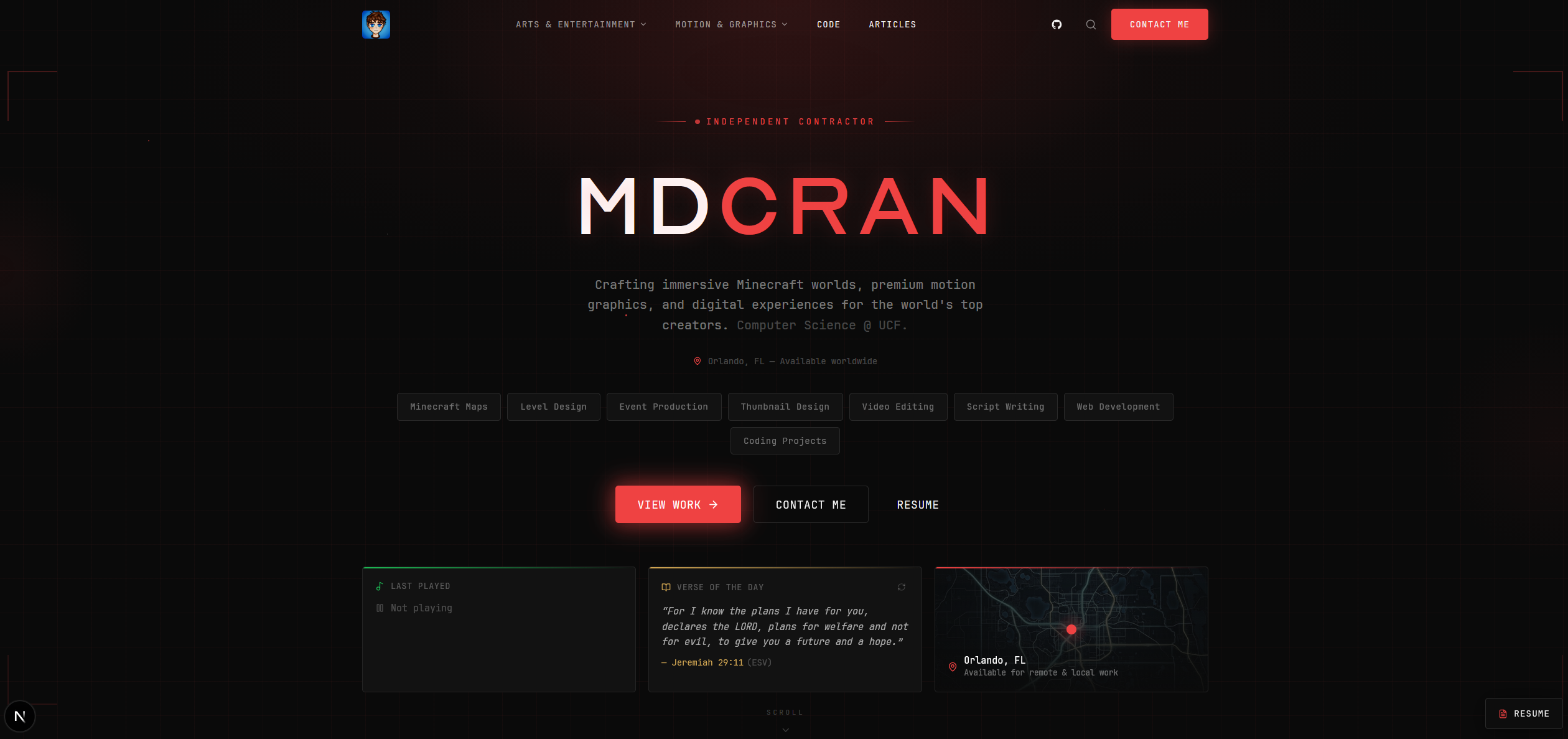
The current MDCran portfolio website — built with Next.js, Tailwind v4, shadcn/ui, and framer-motion.
Internal management and operations platform developed for the U.S. Army Reserve, codename Mercury — streamlining administrative workflows and digital communications.